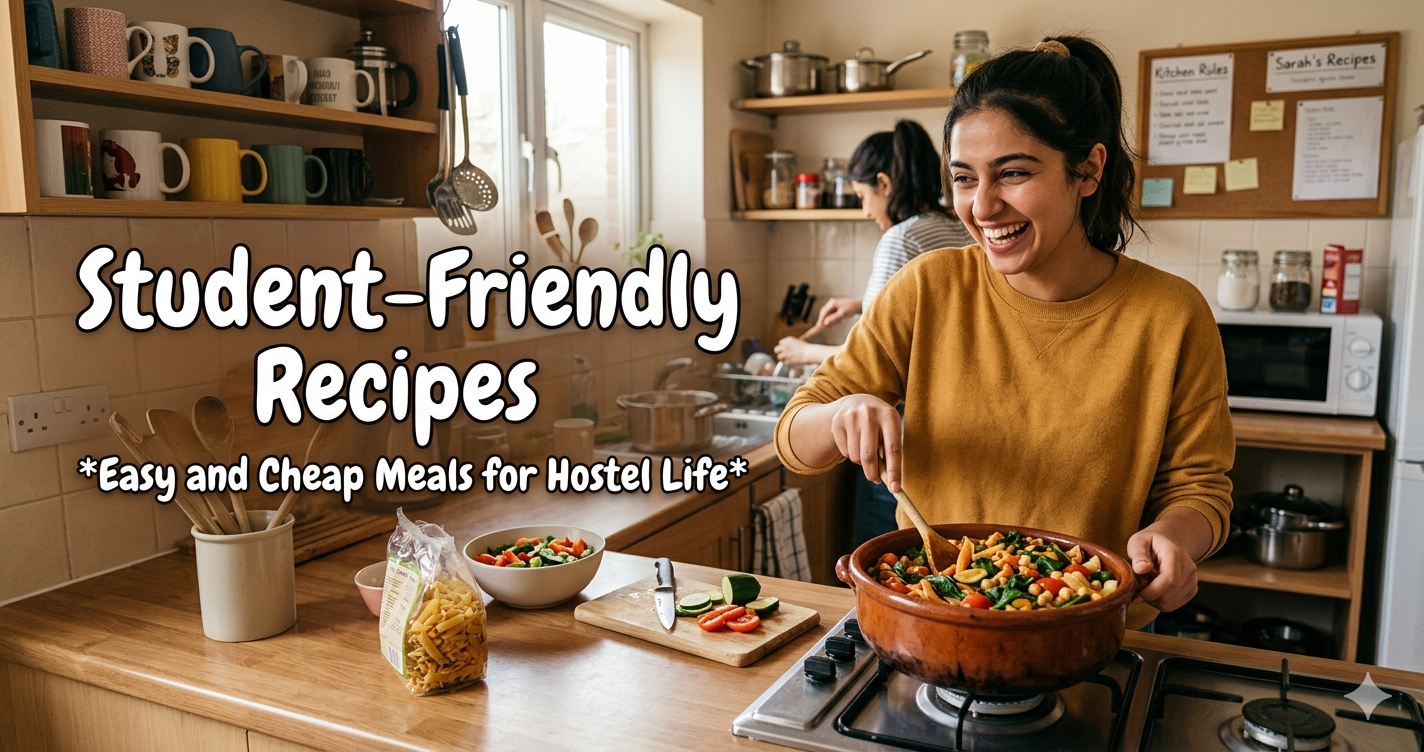
Navigating university life is a balancing act between demanding lectures, late-night study sessions, and a often-tight budget. For many students, the biggest challenge isn’t the exams, but finding sustainable ways to eat well without spending a fortune or hours in a communal kitchen. Student-Friendly Recipes are essential tools for maintaining your health and energy levels. By focusing on versatile, low-cost ingredients and clever cooking hacks, you can transition from overpriced takeout to nutritious, home-cooked comfort food that fits perfectly into the hectic rhythm of campus living.
1. The Power of One-Pot Pasta
One-pot pasta is a lifesaver for hostel students with limited burner space. By boiling your noodles directly in a seasoned sauce or broth, you save time and minimize cleanup. It’s a versatile base that allows you to toss in whatever vegetables or proteins you have on hand.
2. Mastering the Microwave Mug Omelet
When you’re rushing to a 9:00 AM class, a mug omelet is your best friend. Simply whisk two eggs in a greased mug, add chopped peppers or cheese, and microwave for 90 seconds. It’s a high-protein breakfast that costs pennies and requires zero pans.
3. Budget-Friendly Chickpea Salad
Canned chickpeas are an affordable, shelf-stable protein source perfect for hostel life. Toss them with diced cucumbers, tomatoes, and a splash of lemon juice for a refreshing meal. This “no-cook” recipe is ideal for students who don’t have access to a full stove.
4. Upgrade Your Instant Ramen
Instant ramen doesn’t have to be unhealthy. Turn it into a gourmet meal by adding a soft-boiled egg, frozen peas, and a drizzle of soy sauce. These simple additions provide essential vitamins and fiber, making a cheap staple much more satisfying and balanced.
5. Overnight Oats for Busy Mornings
Preparation is key to eating well on a budget. Mix rolled oats with milk or water and a spoonful of peanut butter in a jar before bed. By morning, you have a creamy, ready-to-eat breakfast that keeps you full through long afternoon seminars.
6. The Versatility of Toasted Sandwiches
A basic sandwich maker is a worthy investment for any student. Beyond cheese, try filling your bread with leftover beans or sliced bananas and honey. Toasting your bread makes even the simplest, cheapest ingredients feel like a warm, professional cafe meal.
7. Sheet Pan Roasted Vegetables
If your hostel has a shared oven, sheet pan meals are incredibly efficient. Toss seasonal vegetables and sausages in olive oil and salt, then roast them all together. It’s a hands-off approach to healthy eating that provides enough leftovers for the next day.
8. Creamy Peanut Noodles
For a quick dinner, whisk peanut butter with hot water, soy sauce, and a dash of chili flakes. Toss this sauce with any cooked noodles for a Thai-inspired dish. It’s rich in healthy fats and protein, using ingredients that have a long shelf life.
9. Tuna and White Bean Mash
Canned tuna and white beans are pantry superstars. Mash them together with a bit of black pepper and vinegar to create a filling for wraps or a topping for crackers. This meal is packed with omega-3s and protein without requiring any heat.
10. Simple Stir-Fry with Frozen Veggies
Frozen vegetables are often cheaper and just as nutritious as fresh ones. Sauté them with garlic and ginger, then serve over rice. This method ensures you get your daily greens without worrying about fresh produce spoiling before you can use it.
11. Red Lentil Soup (Dal) Basics
Red lentils cook faster than other legumes, making them perfect for students. Simmer them with turmeric and salt until soft for a comforting, high-fiber soup. It’s one of the cheapest meals globally and scales easily for meal-prepping throughout the week.
12. Quick Quesadillas
Keep a pack of tortillas in your fridge for instant meals. Fill them with cheese and canned black beans, then crisp them in a dry pan. They are much cheaper than buying Mexican takeout and can be customized with leftover chicken or corn.
13. Baked Potatoes in the Microwave
A microwave “baked” potato is a filling, fiber-rich base for any meal. Prick the skin, microwave for 5-7 minutes, and top with beans, cheese, or tuna. It’s a hearty dinner that costs less than a dollar per serving.
14. Sweet Potato and Black Bean Tacos
Sweet potatoes are affordable and last for weeks. Roast or microwave cubes of sweet potato and pair them with seasoned black beans in a tortilla. This vegetarian meal is vibrant, filling, and provides a great boost of vitamin A.
15. The Art of Batch Cooking Rice
Cook a large pot of rice at the start of the week. You can transform it into egg fried rice, use it as a base for stews, or mix it with yogurt and salt for a cooling, traditional snack. It’s the ultimate budget-stretcher.
16. Savory French Toast
French toast isn’t just for syrup. Dip bread in a savory egg wash seasoned with salt, pepper, and herbs, then fry until golden. It’s a clever way to use up stale bread while creating a filling, protein-heavy lunch.
17. Apple and Peanut Butter Snacks
When the afternoon slump hits, skip the vending machine. Sliced apples with peanut butter offer the perfect mix of fiber and healthy fats to keep your brain sharp. It’s a portable, mess-free snack that supports long study sessions.
SEO Meta Description
Discover easy and cheap student-friendly recipes for hostel life. Learn how to cook nutritious, budget-friendly meals with minimal equipment and simple ingredients.
Focus Keywords
-
Student-friendly recipes
-
Cheap hostel meals
-
Budget cooking for students
-
Easy university recipes
-
Microwave meals for students
-
Healthy student snacks
-
Low-cost meal prep
FAQ Section
Q: What are the best pantry staples for a student budget? A: Focus on versatile items like rice, pasta, canned beans, lentils, oats, peanut butter, and soy sauce. These have long shelf lives and can be combined in dozens of ways.
Q: Can I eat healthy in a hostel without a stove? A: Yes! Many nutritious meals like overnight oats, chickpea salads, and microwave-baked potatoes require only a kettle, microwave, or no heat at all.
Q: How can I save money on groceries? A: Buy store brands, opt for frozen vegetables, and try to cook in batches. Planning your meals for the week also prevents expensive impulse buys at the campus shop.
Internal Linking Suggestions
-
Top 10 Essential Kitchen Tools for Every Student Dorm
-
How to Meal Prep for a Busy Week of Lectures
-
Healthy Late-Night Snacks That Won’t Ruin Your Sleep
Conclusion
Mastering the art of hostel cooking is about working smarter, not harder. By utilizing these student-friendly recipes, you can enjoy delicious, varied, and healthy meals even on the tightest budget. Remember that cooking for yourself is a valuable life skill that saves money and fuels your academic success. Start with one or two simple recipes this week, and you’ll soon find that eating well in a hostel is both achievable and rewarding.
Leave a Reply